What Is TMAH: ACritical Chemical from Basic Chemistry to Semiconductor Manufacturing
Release time: 2026-11-13
Tetramethylammonium hydroxide (TMAH) is a critical chemical compound that plays an indispensable role in modern technology, particularly in the microelectronics and semiconductor industries. Often misunderstood as merely a standard strong base, TMAH is a highly specialized substance with unique physico-chemical properties.


1. Recognizing the Substance: What Exactly is TMAH?
To understand TMAH, we must first establish its exact chemical identity. TMAH stands for Tetramethylammonium hydroxide. It is a quaternary ammonium salt and a strong alkali, characterized by a tetramethylammonium cation (N(CH3)4+) and a hydroxide anion (OH–).
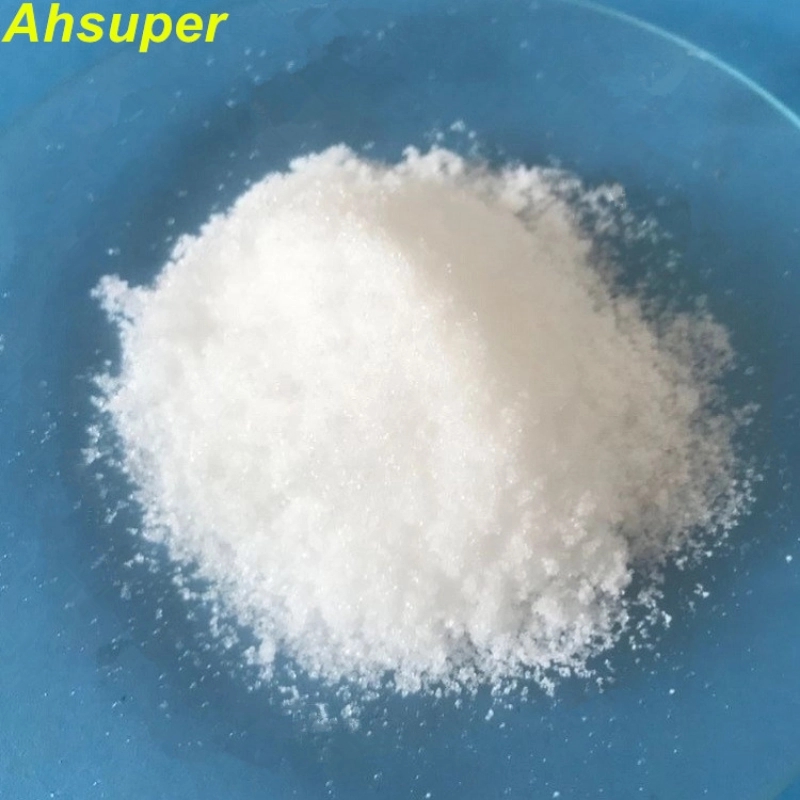
It is crucial to distinguish TMAH from other similar-sounding chemicals, such as tetramethylammonium chloride, and to recognize the difference between “ammonium” (bearing a positive charge) and “amine.” Furthermore, TMAH is rarely used in its pure, solid form. Commercially, it is most frequently encountered as an aqueous solution, an alcoholic solution (such as in methanol), or as a solid pentahydrate (N(CH3)4OH · 5H2O). The physical state heavily dictates its CAS registry number, stability, and handling requirements.
| Attribute | Detail |
| Chemical Name | Tetramethylammonium hydroxide |
| Abbreviation | TMAH |
| Chemical Formula | C4H13NO or N(CH3)4+ OH– |
| Grades | 25% Aqueous Solution (Industrial grade & Electronic grade), 25% Methanol Solution Industrial grade, Solid 98% Pentahydrate (Industrial grade & Electronic grade) |
| Primary Industrial Use | Electronics manufacturing, silicon etching, chemical synthesis, catalysts |
| Key Risk Profile | Highly corrosive, potential acute systemic toxicity |
2. Physical and Chemical Properties
The behavior of TMAH in industrial settings is entirely governed by its physico-chemical properties. Understanding these properties is essential for storage, process integration, and safety.
Alkalinity and Dissociation
TMAH is a profoundly strong base. In aqueous solutions, it dissociates completely into its constituent ions. This high degree of dissociation makes it incredibly effective in acid-base neutralization and deprotonation reactions.
Concentration and Environmental Interactions
In industrial contexts, TMAH concentration is typically expressed as a mass fraction (e.g., the industry standard 2.38% used in lithography). A critical property of TMAH is its reactivity with ambient air. It readily absorbs carbon dioxide (CO2) to form tetramethylammonium carbonate, which can degrade the chemical’s effectiveness in precision processes. Therefore, high-purity chemical storage systems must utilize inert gas blanketing (such as nitrogen) to maintain stability.
Solvent Differences
It is vital to differentiate between aqueous TMAH and organic solvent-based TMAH (like methanol solutions). The thermal stability, density, viscosity, and conductivity vary drastically depending on the solvent. Thermal decomposition of TMAH typically creates trimethylamine and methanol, a behavior that must be factored into high-temperature processing.
3. Mechanisms of Action: Why TMAH Works
Why is TMAH chosen over cheaper bases like sodium hydroxide (NaOH) or potassium hydroxide (KOH)? The answer lies in its specific mechanisms of action across different processes.
- The Alkaline Action (Fundamental Level): At its core, the hydroxide ions provide a highly alkaline environment, facilitating deprotonation and altering the solubility of various polymers.
- Ion-Surface Interaction (Advanced Level): Unlike Na+ or K+, the bulky, organic N(CH3)4+ cation does not easily diffuse into silicon lattices. Therefore, it does not contaminate the semiconductor substrate with mobile metal ions, which would otherwise ruin the electrical properties of the microchip.
- Application-Specific Mechanisms:
- In Lithography: TMAH acts by neutralizing the acidic groups of exposed photoresist polymers, making them water-soluble.
- In Etching: The hydroxide ions attack the silicon surface, while the bulky cations selectively shield certain crystal planes, leading to highly controlled, directional material removal.
4. Core Applications: Semiconductor and Display Manufacturing
The most prominent stage for TMAH is within the cleanrooms of semiconductor and display manufacturing facilities. Its metal-ion-free nature makes it irreplaceable.
Lithography and Development
In the photolithography process, TMAH is the industry-standard photoresist developer. After a silicon wafer coated with photoresist is exposed to UV light, it is washed with a developer solution—almost universally a 2.38% TMAH aqueous solution. The developer precisely dissolves the exposed areas (in positive resist) without swelling or degrading the unexposed patterns. Factors such as temperature, concentration consistency, and wetting agents are meticulously controlled to ensure perfect line-width resolution and to minimize post-development defects.
Silicon Anisotropic Etching
TMAH is universally recognized as a premier reagent for anisotropic etching of silicon. “Anisotropic” means the etching rate varies depending on the crystallographic direction of the silicon substrate. TMAH etches the (100) crystal plane significantly faster than the (111) plane. This property allows engineers to carve precise V-grooves, pyramids, and micro-electro-mechanical systems (MEMS) structures. Compared to alternatives like EDP or KOH, TMAH is less toxic than EDP and, unlike KOH, does not introduce alkali metal contamination.
| Application | Role of TMAH | Key Process Variables | Output Metrics |
| Photolithography | Developer for photoresist | Concentration (2.38%), Time, Temperature | Resolution, Line-width, Defect count |
| Silicon Etching | Directional removal of silicon | Temperature, Additives, Mask material | Etch rate, Surface roughness, Selectivity |
| Display (LCD/OLED) | Micro-fabrication of panels | Substrate compatibility, Scale | Process uniformity, Yield |
5. Other Notable Applications
Beyond the rigid confines of semiconductor cleanrooms, TMAH finds utility in several other scientific and industrial domains.
- Organic Synthesis and Catalysis: It serves as a strong, organic-soluble base and a phase-transfer catalyst in specific organic reactions.
- Analytical Chemistry: TMAH is used as a derivatization agent in gas chromatography and for sample preparation, aiding in the dissolution of complex matrices.
- Material Science: It acts as a peptizing agent to stabilize magnetic nanoparticles and prevents agglomeration in various colloidal dispersions.
- Rubber Antioxidant: TMAH 25% aqueous solution (industrial-grade) widely used as catalysts in rubber antioxidants.
6. Preparation, Purification, and Manufacturing
Transforming raw chemical components into an ultra-pure electronic-grade material is a marvel of modern chemical engineering.
Historically, TMAH could be synthesized via the reaction of tetramethylammonium chloride with potassium hydroxide, but this leaves unacceptable levels of chloride and potassium impurities. Today, the dominant industrial route for producing high-purity chemical grades relies on advanced electrolysis.
In this electrochemical process, an electrical current drives the separation and purification of the quaternary ammonium salt through ion-exchange membranes. The challenges in large-scale manufacturing involve not just the chemical reaction, but the rigorous control of the manufacturing environment. To achieve parts-per-trillion (ppt) impurity levels, manufacturers must utilize highly specialized contact materials (like PFA or PTFE piping), ultra-pure water (UPW), and cleanroom packaging facilities.
7. Product Grades and Quality Indicators
Not all TMAH is created equal. The industry categorizes the chemical into Industrial, Reagent, and Electronic grades.
For electronic applications, “high purity” is an absolute prerequisite. However, total purity is not the only metric; the specific limits on key impurities dictate the product’s viability. Quality Control (QC) monitors:
- Metal Impurities: Sodium, Potassium, Iron, Copper, etc. (often strictly limited to < 1 ppb).
- Anions: Chlorides, Sulfates, Nitrates.
- Particulates: Stringent limits on microscopic particle counts to prevent wafer defects.
- Carbonates: Due to CO2 absorption, carbonate levels are closely monitored as they can alter the effective alkalinity and development rate.
Certificates of Analysis (COA) must be rigorously evaluated during procurement to ensure the batch meets specific fabrication node requirements.
8. Health Hazards and Safety Management
Treating TMAH merely as a standard corrosive alkali is a dangerous misconception. Safety management must account for its unique toxicological profile.
TMAH exhibits severe corrosiveness, causing irreversible damage to the skin and eyes upon contact. More alarmingly, literature and Safety Data Sheets (SDS) highlight its potential for acute toxicity. Dermal exposure to TMAH solutions can lead to rapid systemic absorption, which affects the central nervous system and can cause respiratory failure or cardiac arrest.
Risk Control Hierarchy:
- Engineering Controls: Automated chemical supply systems, closed-loop piping, and local exhaust ventilation are mandatory.
- Administrative Controls: Strict Standard Operating Procedures (SOPs) for handling, transfer, and emergency spill response.
- Personal Protective Equipment (PPE): Standard latex gloves are insufficient. Workers must use specific chemical-resistant suits and gloves (e.g., heavy-duty nitrile or butyl rubber) that have undergone rigorous permeation testing against TMAH.
9. Environmental Impact and Resource Circulation
The high volume of TMAH used in semiconductor manufacturing generates substantial wastewater. Because of its toxicity to aquatic life and inhibitory effects on standard biological treatment processes, TMAH wastewater management is a critical environmental challenge.
Wastewater Treatment Strategies:
Simply neutralizing the pH of the wastewater does not eliminate the tetramethylammonium ion. True environmental compliance requires removing or mineralizing the organic nitrogen compound. Technologies include:
- Biological Treatment: Utilizing specifically acclimated bacterial strains that can biodegrade TMAH into harmless byproducts.
- Advanced Oxidation Processes (AOP): Using ozone, hydrogen peroxide, and UV light to break down the chemical structure.
- Ion Exchange: Using resins to selectively capture the TMA+ ions from the effluent.
Furthermore, the industry is heavily investing in resource recovery. Advanced membrane separations and electrochemical recycling technologies are being deployed to capture TMAH from waste streams, purify it, and recycle it back into the manufacturing process. This closed-loop approach significantly reduces chemical costs and environmental footprints.
10. Industry Trends and Regulations
As the semiconductor industry pushes toward smaller nanometer nodes (e.g., 3nm and below), the demand for ultra-high-purity TMAH is intensifying. Process consistency and zero-defect tolerances are driving manufacturers to refine their purification capabilities continually.
Simultaneously, global regulatory bodies are tightening the restrictions on TMAH handling and disposal. Facilities must navigate a complex web of environmental compliance, occupational health mandates, and cross-border chemical registrations (like REACH in Europe). The overarching trend is a dual focus: achieving extreme material purity while maximizing sustainability through efficient waste regeneration.
FAQs
Q1: Why is TMAH preferred over sodium hydroxide (NaOH) in semiconductor manufacturing?
A: Sodium hydroxide contains mobile alkali metal ions (Na+). If these metal ions contaminate a silicon wafer, they can easily diffuse into the semiconductor material, short-circuiting the microscopic transistors and ruining the chip. TMAH provides the necessary alkalinity but uses a bulky organic cation (N(CH3)4+) that does not diffuse into or contaminate the silicon substrate.
Q2: Is neutralizing the pH of TMAH wastewater sufficient before discharging it?
A: No. While adding acid will neutralize the high pH of the hydroxide, it leaves behind the tetramethylammonium cation (TMA+) in the water. This organic ion is toxic to aquatic environments and can inhibit biological activity. Proper wastewater treatment requires advanced methods like specialized biological degradation, ion exchange, or advanced oxidation to completely remove or mineralize the TMA+ ion.
Q3: Can a 25% TMAH solution be directly diluted to make a 2.38% developer solution for lithography?
A: In a laboratory setting for basic research, it is chemically possible. However, in industrial semiconductor manufacturing, this is practically never done by the end-user. Diluting a 25% solution requires ultra-pure water and extreme environmental controls to prevent the introduction of micro-bubbles, particulate matter, and dissolved carbon dioxide, which would alter the concentration and ruin the photolithography yield. Manufacturers purchase the 2.38% solution pre-mixed and certified to specific electronic grades.