Quaternary Ammonium Compounds Introduction
Release time: 2026-07-07
Table of Contents
From medical sterilization packaging facilities to industrial water treatment plants, maintaining strict hygiene and microbial control is non-negotiable. At the core of many modern sanitization protocols are Quaternary Ammonium Compounds(ADBAC/DDAC), commonly referred to as QACs or “quats.”
But what exactly are these compounds, and why have they become a staple in industrial and commercial chemical applications? This guide breaks down the chemical structure, working mechanisms, and primary industrial applications of QACs.
What Are Quaternary Ammonium Compounds?
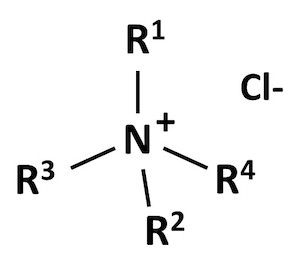
Quaternary ammonium compounds are a broad class of positively charged surface-active agents (surfactants). Chemically, they are organic salts where a central nitrogen atom is bonded to four distinct carbon-based groups, creating a permanent positive charge (cation) regardless of the pH of their environment.
This unique molecular structure gives QACs exceptional antimicrobial, antistatic, and conditioning properties, making them highly versatile across a wide spectrum of industries.
How Do Quaternary Ammonium Compounds Work?
The fundamental formula for a quaternary ammonium salt is represented as NR4+ X–, where R represents alkyl or aryl groups, and X is an anion (typically chloride or bromide).
The effectiveness of QACs as disinfectants stems directly from their chemical polarity:
- Electrostatic Attraction: The cell walls of most bacteria, fungi, and certain viruses carry a net negative charge. The positively charged (cationic) head of the QAC molecule is powerfully attracted to these negatively charged microbial surfaces.
- Membrane Disruption: Once attached, the long hydrocarbon tail (the hydrophobic portion) of the QAC penetrates the lipid bilayer of the microorganism’s cell membrane.
- Cellular Lysis: This penetration disrupts the physical integrity of the membrane. Crucial intracellular materials leak out, and degrading enzymes enter, ultimately leading to the rapid death of the pathogen (lysis).
Because they attack the physical structure of the cell rather than targeting a specific biological pathway, it is more difficult for pathogens to build resistance to QACs compared to traditional antibiotics.
Core Industrial and Commercial Applications
Quaternary ammonium compounds are not a single chemical, but a family of formulations tailored for specific use cases. Their applications span several major industrial sectors:
1. Medical and Healthcare Sanitization
In clinical settings, preventing healthcare-associated infections (HAIs) is critical. QAC formulations are widely used in hospital-grade surface disinfectants. Because they are generally non-corrosive, they are safe to use on sensitive medical equipment, examination tables, and in the manufacturing environments of medical sterilization packaging where maintaining an aseptic baseline is required.
2. Industrial Water Treatment
Cooling towers, commercial boilers, and wastewater treatment facilities are highly susceptible to algae and bacterial biofilms. Quaternary ammonium compounds are deployed as highly effective algaecides and biocides to prevent bio-fouling, which can degrade machinery, reduce thermal efficiency, and cause structural corrosion over time.
3. Food and Beverage Processing
The food manufacturing industry relies heavily on quaternary ammonium compounds for sanitizing food contact surfaces, conveyor belts, and processing machinery. Unlike chlorine-based sanitizers, QACs are odorless, non-staining, and do not leave a highly corrosive residue, making them ideal for prolonged use on stainless steel food-grade equipment.
4. Textiles and Fabric Softeners
Beyond killing bacteria, the cationic nature of quaternary ammonium compounds makes them excellent fabric softeners and antistatic agents. When applied to textiles, the positive charge neutralizes the negative charge of the fabric fibers, reducing static cling and imparting a smooth, soft feel.
Key Advantages of Using Quaternary Ammonium Compounds in Industry
Facility managers and chemical procurement teams consistently choose quaternary ammonium compounds over alternatives like hypochlorite (bleach) or phenolics for several operational reasons:
- Broad-Spectrum Efficacy: Effective against a wide range of gram-positive and gram-negative bacteria, enveloped viruses, and fungi.
- Surface Stability: QACs possess high residual activity. Once applied to a surface, they continue to inhibit microbial growth long after the initial application has dried.
- Material Compatibility: They are fundamentally non-corrosive to metals, plastics, and synthetic rubbers, protecting expensive industrial machinery and delicate electronics from degradation.
- Temperature Resilience: QACs remain stable and highly effective across varied temperature ranges, unlike some sanitizers that break down rapidly in hot water.
Environmental Profile and Safe Handling
While quaternary ammonium compounds are generally safer for users than volatile chemical disinfectants, proper handling protocols are essential in a B2B environment. High concentrations used in industrial manufacturing must be handled with appropriate PPE, as they can cause skin and respiratory irritation.
Furthermore, industrial discharge of QACs is regulated. Because they are biocides, releasing large quantities of untreated QACs into municipal wastewater can disrupt the biological treatment processes of local water treatment plants. Therefore, industrial facilities must implement proper neutralization or dilution protocols prior to discharge to comply with environmental regulations.
Frequently Asked Questions (FAQ)
1. Are Quaternary Ammonium Compounds safe for humans?
When diluted to the manufacturer’s specified concentrations, QACs are very safe for human exposure and are common in household cleaners. However, industrial-grade, highly concentrated QACs require proper handling and PPE to prevent skin and eye irritation.
2. Do QACs leave a residue?
Yes, QACs intentionally leave a microscopic active residue on surfaces. This is highly beneficial for industrial environments as it provides continued residual protection against microbial growth between cleaning cycles.
3. How do QACs differ from bleach?
Unlike bleach (sodium hypochlorite), QACs are largely non-corrosive, odorless, and stable in storage. While bleach is highly reactive and degrades quickly when exposed to light or organic loads, QACs maintain their efficacy and will not damage metal equipment or textiles.